
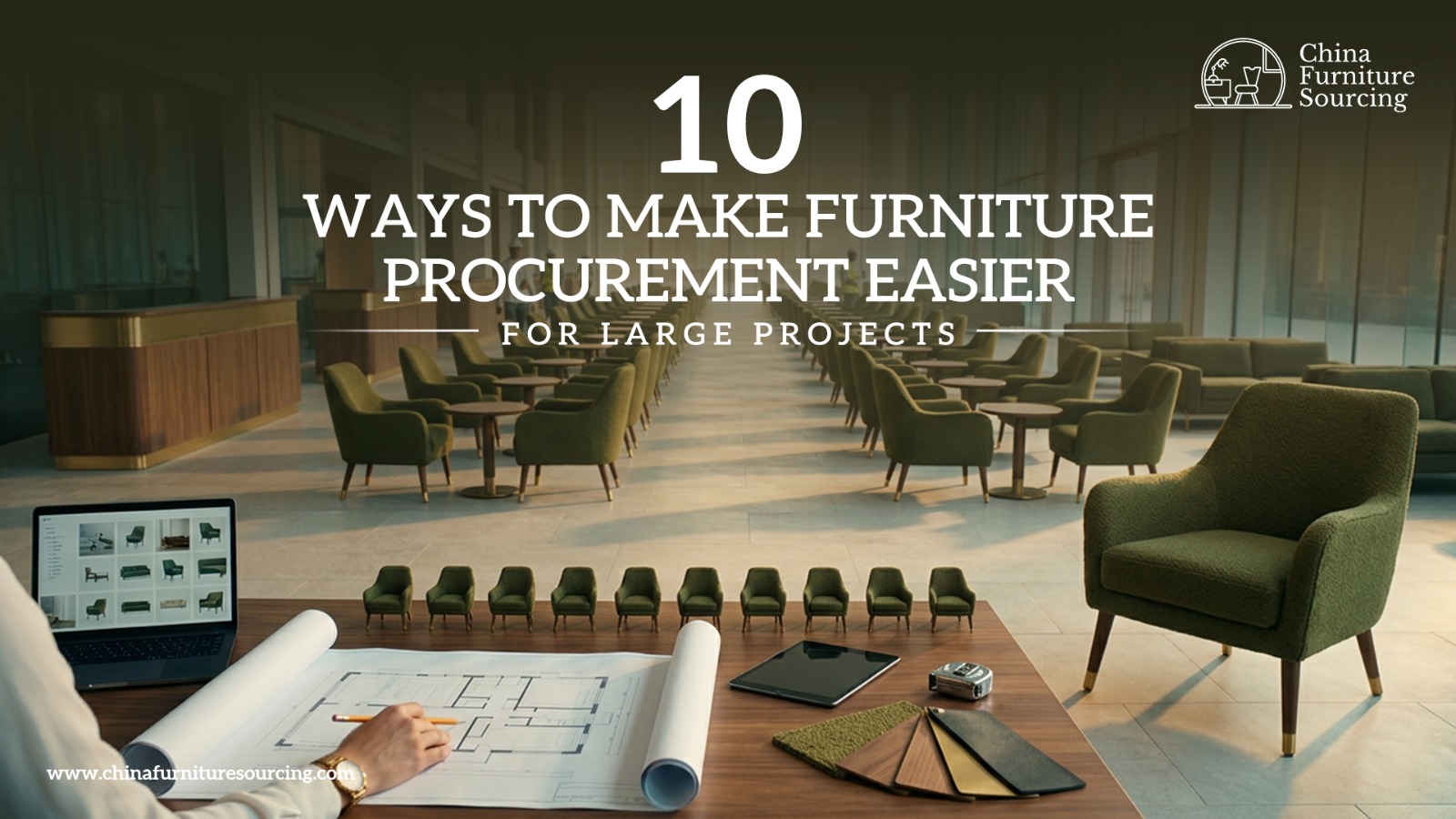
Furniture Procurement: 10 Effective Ways to Simplify Large Projects
Introduction
Furniture procurement for large projects involves much more than selecting products and placing bulk orders. From managing multiple furniture categories to coordinating manufacturers, quality inspections, quantities, and delivery schedules, the process can become complicated without proper planning.
For commercial spaces, hotels, offices, retail developments, and hospitality projects, an organised furniture procurement process helps businesses manage costs, reduce delays, and maintain product consistency.
Whether you are sourcing furniture for a single commercial development or multiple project locations, having a structured procurement strategy can make the entire process more efficient.
Here are 10 effective ways to simplify furniture procurement and manage large-scale projects successfully.
1. Define Your Furniture Procurement Requirements Clearly
Start by identifying the furniture requirements for every area of your project. Prepare a detailed list covering product categories, quantities, dimensions, materials, finishes, and functional requirements.
For example, a hotel project may require guest room furniture, lobby seating, restaurant tables, reception desks, and outdoor furniture.
Clear specifications help manufacturers understand your expectations and reduce confusion during sourcing and ordering.
2. Set a Realistic Furniture Procurement Budget
Budget planning is an important part of furniture procurement for large projects. Before approaching manufacturers or suppliers, establish a realistic budget based on your project requirements.
Your budget should account for:
- Furniture manufacturing costs
- Packaging and handling expenses
- International shipping charges
- Customs duties and applicable taxes
- Transportation and installation costs
Considering these expenses in advance helps businesses avoid unexpected costs and make better purchasing decisions.
3. Prepare a Detailed Furniture BOQ
A Bill of Quantities (BOQ) makes large-scale furniture procurement easier to organise and manage.
It provides a structured record of product descriptions, dimensions, specifications, finishes, and required quantities. A detailed BOQ also helps manufacturers prepare accurate quotations based on actual project requirements.
For projects involving multiple furniture categories, maintaining a centralised BOQ can improve communication and reduce ordering mistakes.
4. Shortlist Suitable Furniture Manufacturers
Choosing the right manufacturer is essential for successful furniture procurement. Instead of approaching random suppliers, identify manufacturers based on their product categories, production capabilities, quality processes, and experience with bulk orders.
Evaluate manufacturers based on:
- Manufacturing capabilities
- Product range and customisation options
- Previous project experience
- Quality inspection facilities
- Production capacity and delivery timelines
Working with suitable manufacturers makes sourcing coordination more organised and helps businesses find products that meet their project requirements.
5. Compare Quotations Beyond Pricing
The lowest quotation does not always represent the best value. During furniture procurement, buyers should compare quotations based on product specifications, materials, construction quality, finishes, and delivery conditions.
Consider the following factors before finalising an order:
- Material specifications
- Product dimensions and construction
- Finishing and customisation requirements
- Manufacturing timelines
- Packaging and shipping arrangements
Evaluating these details helps businesses make informed purchasing decisions rather than focusing only on the initial quoted price.
6. Request Product Samples Before Bulk Orders
Product images cannot always communicate actual material quality, dimensions, comfort, or finishing details.
Requesting samples before confirming bulk orders allows buyers to evaluate the products physically and compare them against project specifications.
Check the materials, colour consistency, construction, finishing, and overall appearance. If modifications are required, communicate them before approving mass production.
This step can help reduce product variations and minimise issues during large-scale furniture procurement.
7. Standardise Furniture Specifications
Maintaining consistent specifications across furniture categories is particularly important for hotels, offices, retail chains, and multi-location developments.
Document approved materials, colours, dimensions, finishes, and quality requirements for every product.
Standardisation helps reduce variations between production batches and makes it easier to maintain a consistent appearance across different project locations.
It also simplifies future reordering when additional furniture is required.
8. Plan Production and Delivery Timelines
Furniture procurement should always align with the overall project schedule. Discuss production lead times, inspection schedules, packaging requirements, shipping arrangements, and expected delivery dates with manufacturers in advance.
Create a timeline covering:
- Product specification approval
- Sample review and confirmation
- Production commencement
- Quality inspections
- Packaging and dispatch
- Shipment and final delivery
Allow additional time for potential delays instead of planning around ideal delivery dates. Proper scheduling helps businesses coordinate furniture deliveries with construction and interior execution activities.
9. Coordinate Quality Checks Before Dispatch
Quality control should be an essential part of every large furniture procurement project.
Establish clear quality expectations before production begins. Depending on the order, inspections can include material verification, dimensional accuracy, finishing, structural condition, product functionality, and packaging.
Documenting inspection requirements helps manufacturers understand the expected standards and maintain consistency across bulk shipments.
Pre-dispatch inspections can also help identify issues before products leave the manufacturing facility.
10. Plan Logistics and Container Utilisation
For international furniture sourcing, logistics planning plays an important role in controlling overall procurement costs.
Consider packaging dimensions, product quantities, container capacity, shipment schedules, and destination requirements before finalising orders.
Efficient container utilisation can help businesses manage shipping expenses and organise international deliveries more effectively.
Buyers should also understand the applicable international shipping responsibilities and delivery terms.
Conclusion
Successful furniture procurement for large projects requires a structured approach, from initial planning to final delivery.
Clear specifications, detailed BOQs, suitable manufacturer selection, sample approvals, quality inspections, and coordinated logistics can make the entire process more manageable.
Rather than focusing only on purchasing furniture in bulk, businesses should build a procurement strategy that delivers the right products within the planned budget and project timeline.
A well-organised procurement process can help reduce sourcing challenges, maintain product consistency, and support the successful execution of commercial and hospitality projects.
Planning Furniture Procurement for Your Next Project?
China Furniture Sourcing (CFS) helps businesses source furniture from manufacturers in China for commercial and large-scale projects.
From understanding product requirements to identifying suitable manufacturers and coordinating sourcing activities, CFS focuses on helping buyers explore furniture solutions that align with their project specifications and requirements.
Whether you are planning an office, hotel, hospitality space, or commercial development, having the right sourcing approach can make furniture procurement more organised.
Have a large furniture requirement? Connect with China Furniture Sourcing to discuss your project and sourcing needs.