
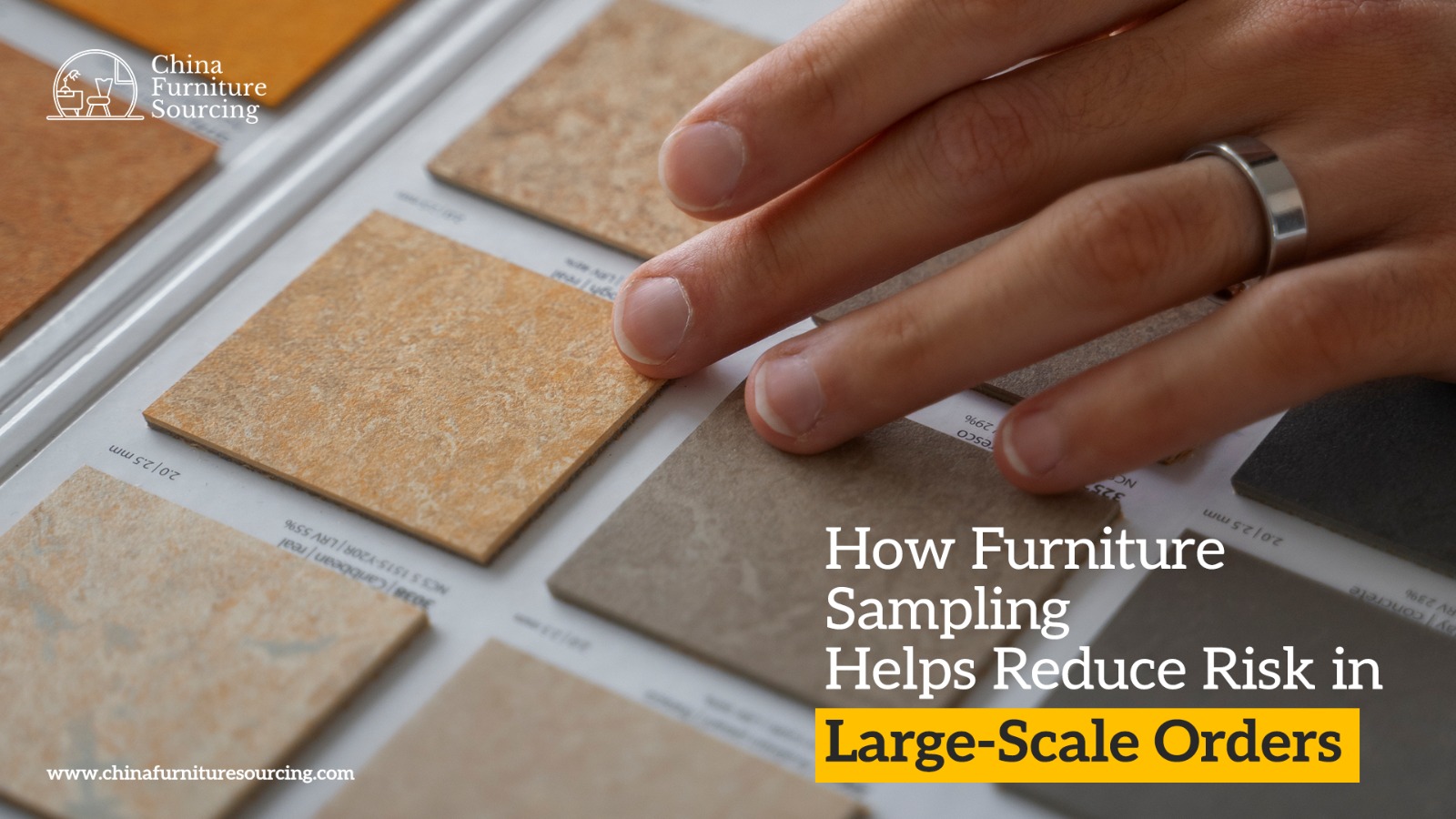
How Furniture Sampling Helps Reduce Risk in Large-Scale Orders
Introduction
Discover how furniture sampling helps reduce bulk order risks, verify product quality, confirm specifications, and control costs in commercial furniture sourcing.
Ordering furniture in large quantities requires careful planning, especially for commercial projects, hotels, offices, retail spaces, and hospitality developments. While product images and catalogues help buyers shortlist options, they cannot always reveal the actual quality, finish, comfort, or construction of a product.
This is where furniture sampling becomes an important part of the procurement process. Reviewing samples before placing a bulk furniture order helps businesses identify potential issues early, make informed decisions, and reduce costly mistakes.
1. Verify Furniture Quality Before Bulk Production
One of the biggest risks in bulk furniture procurement is receiving products that do not meet the expected quality standards. Images may look impressive, but the actual furniture can differ in material quality, construction, stitching, finishing, or hardware.
A physical sample allows buyers to inspect these details before approving a larger order. They can evaluate the materials, check the overall build, and identify visible defects.
This early assessment helps establish clear quality expectations before production begins.
2. Confirm Dimensions and Product Specifications
Incorrect furniture dimensions can create problems during installation and space planning. A chair may not fit comfortably under a desk, or a table may occupy more space than the layout allows.
Furniture sampling allows buyers to verify measurements, proportions, usability, and product specifications against project requirements.
For commercial furniture projects, this step is particularly valuable because even small dimensional differences can affect multiple units across an entire space.
3. Evaluate Comfort and Functionality
Furniture must perform well in its intended environment, not simply look attractive. For example, office seating should provide suitable support, while hospitality furniture should meet the comfort and practical requirements of its users.
Testing a sample helps buyers assess comfort, stability, usability, and functional features. Depending on the product, they can also check adjustments, moving parts, load capacity documentation, and ease of operation.
These checks help determine whether the selected furniture is suitable for its intended application.
4. Match Colours, Materials, and Finishes
Consistency is essential when furnishing large commercial spaces. Differences in upholstery shades, surface finishes, textures, or materials can affect the overall appearance of a completed project.
Approving a physical sample gives buyers a reference for the expected colour, finish, and material quality. This reference can then be used when communicating requirements to the supplier and reviewing production quality.
However, buyers should also confirm acceptable tolerances, since minor variations may occur between samples and mass-produced items.
5. Identify Problems Before They Become Expensive
Discovering a product issue after hundreds of units have been manufactured can lead to rework, replacement costs, delivery delays, and additional shipping expenses.
Furniture sampling helps identify potential concerns before bulk production is approved. Buyers can request modifications, clarify specifications, and finalise product details at an earlier stage.
Although sampling involves additional time and expense, it can help prevent much larger costs later.
6. Improve Supplier Communication and Accountability
A sample provides a physical reference that both the buyer and supplier can use to understand product expectations. Instead of relying entirely on written descriptions, both parties can discuss specific details such as stitching, dimensions, materials, finishes, and construction.
Once approved, the sample and agreed specifications can support quality-control checks during production. Buyers should document the approval and clarify how the final products will be inspected.
Conclusion
Furniture sampling is a practical risk-management step in large-scale furniture procurement. It helps buyers verify quality, confirm specifications, evaluate functionality, maintain consistency, and reduce the likelihood of expensive errors.
For businesses sourcing commercial furniture, the objective is not simply to approve a product quickly. It is to ensure the selected furniture meets project requirements before committing to a large order.
Planning a Bulk Furniture Order?
China Furniture Sourcing (CFS) helps businesses source furniture from manufacturers in China for commercial and large-scale projects. A structured sourcing process, clear product specifications, and appropriate sample evaluation can help buyers make more confident procurement decisions.
Connect with CFS to explore furniture sourcing options for your next project.